



AssureID® for Secure Healthcare Identity and Access
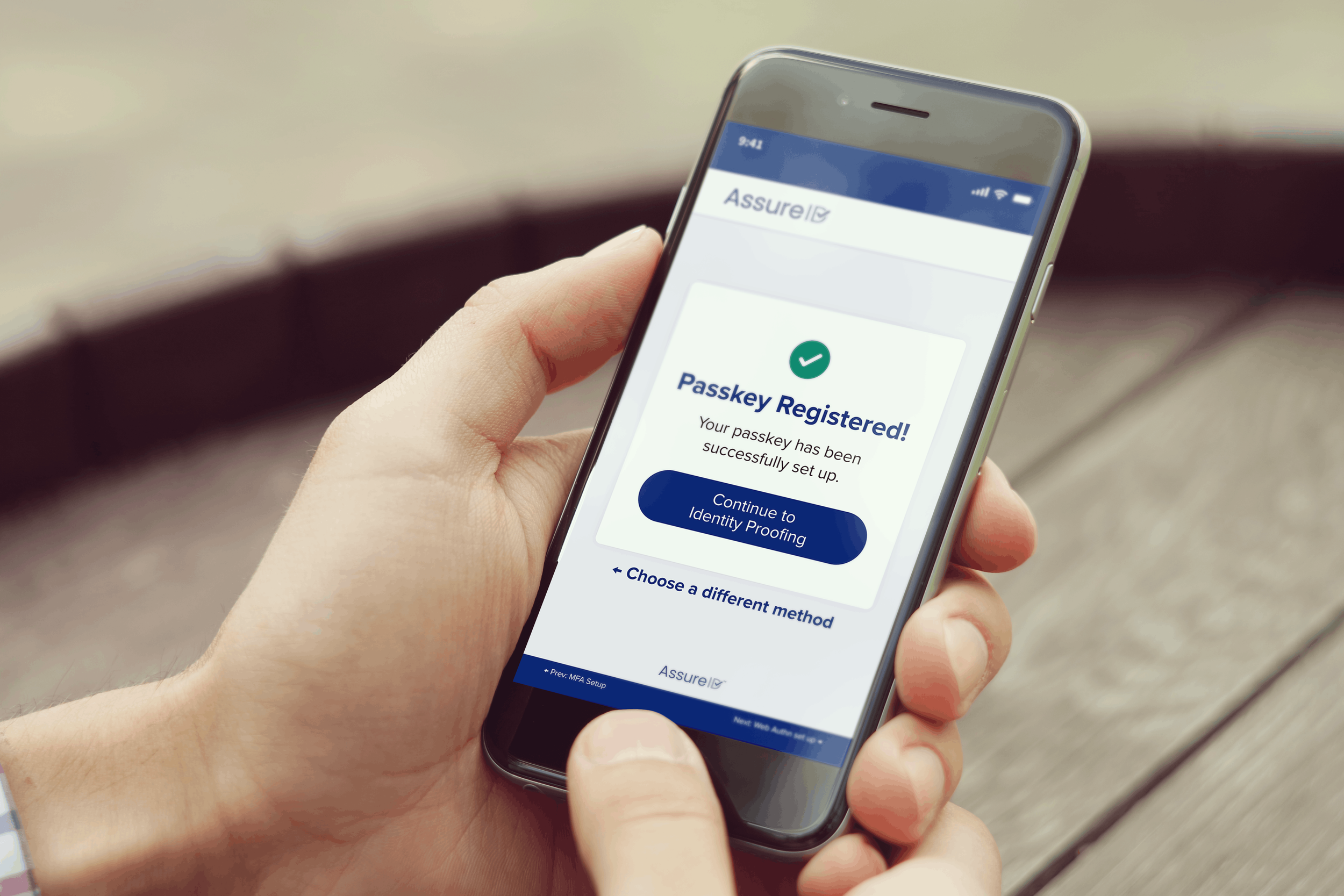
AssureID® is part of SandwYch’s integrated platform, supporting secure access, trusted identity, consent, and connected care. Aligned with NIST 800-63 IAL2 and AAL2 standards, it ensures every patient, provider, and partner is accurately verified, properly authenticated, and securely connected across your care ecosystem.
Reduce identity-related risk and strengthen trust across data exchange.
What is AssureID®?
A Digital Identity Platform Built for Healthcare
AssureID® is SandwYch's digital identity platform that creates a trusted identity for every participant in the healthcare ecosystem. Rather than relying on fragmented credentials across multiple systems, AssureID establishes a single verified identity that supports secure access and for downstream consent management, interoperability, and coordinated care.

Who Uses AssureID®?
AssureID supports every organization involved in delivering, coordinating, or accessing healthcare.
Healthcare Providers verify patients before delivering care.
Health Plans reduce fraud and improve member identity management.
Community-Based Organizations securely collaborate with providers and care teams.
Patients & Care Partners access health information safely and confidently.
How AssureID® Supports Healthcare Access

VERIFY EVERY USER WITH CONFIDENCE
AssureID verifies the identity of patients, providers, care partners, and authorized users before access is granted. Accurate identity matching helps prevent duplicate records and ensures each person is connected to the correct health information.
35% of denied claims—an estimated $17.4 million annually—are linked to inaccurate patient identification.

AUTHENTICATE WITH HIGH-TRUST MFA
AssureID supports NIST-aligned multi-factor authentication and high-assurance login methods to confirm user identity before protected information is accessed.
Credential misuse and social engineering remain leading causes of healthcare security breaches.

ENABLE TRUSTED ACCESS ACROSS ALL CARE ROLES
AssureID validates identities so patients, providers, care managers, health plans, and community organizations can securely access their information.
The U.S. healthcare system loses an estimated $765 billion annually due to administrative complexity, including fragmented identity and access management.

REDUCE ERRORS & PREVENT FRAUD
By verifying identities before information is shared, AssureID helps reduce duplicate records, unauthorized access, and costly downstream administrative errors.
Healthcare organizations spend approximately $1.3 million each year resolving patient identity issues.

How AssureID® Connects to Care Coordination
Connected care begins with trusted identity. AssureID® verifies patients, providers, care partners, and community organizations before health information is shared, creating a secure foundation for collaboration, interoperability, and coordinated care across the healthcare ecosystem.

STEP 1
Verify Identity
AssureID establishes trusted digital identities using NIST IAL2 and AAL2 identity assurance standards. Every patient, provider, and authorized user is verified before accessing clinical systems, benefits, or digital healthcare services.

STEP 2
Authenticate the User
Once identities are verified, AssureID securely authenticates each user through high-assurance login methods and multi-factor authentication (MFA), helping ensure only authorized individuals can access protected health information.

STEP 3
Capture Patient Consent
Patients maintain control over who can access their health information through integrated downstream digital consent management. Consent preferences travel with the patient, supporting person-centered care.

STEP 4
Authorize Appropriate Access
Sandwych uses AssureID downstream to apply role-based access controls so providers, care managers, pharmacists, health plans, and community organizations receive the information they are authorized to view, supporting privacy, compliance, and secure collaboration.

STEP 5
Share Trusted Information
With trusted identities established, organizations can securely exchange health information through FHIR APIs, TEFCA-aligned networks, and payer-to-payer data sharing, improving interoperability and care coordination across the healthcare ecosystem.

STEP 6
Maintain Audit & Compliance
Every interaction is supported by audit trails, access controls, and compliance with healthcare security initiatives. AssureID helps organizations reduce risk while supporting CMS initiatives, regulatory requirements, and ongoing governance.
Frequently Asked Questions About AssureID®
-
AssureID® helps solve common healthcare identity challenges, including duplicate patient records, identity fraud, unauthorized access, and patient matching errors. By verifying every user, it improves security, data accuracy, and operational efficiency across healthcare organizations.
-
Duplicate and mismatched patient records create administrative burden, increase costs, and introduce patient safety risks. AssureID® verifies identities before information is shared, helping organizations improve data quality, reduce duplicate records, and connect patients with the correct health information across systems.
-
Accurate patient matching begins with trusted identity verification. AssureID® helps organizations verify identities before records are created or shared, reducing mismatched records, duplicate identities, and administrative errors while improving care coordination across the healthcare ecosystem.
-
Yes. AssureID® is designed to work alongside existing healthcare technology using modern interoperability standards and APIs. It supports secure identity verification, authentication, and trusted data exchange without requiring organizations to replace their current systems.
-
AssureID® establishes trusted digital identities that help healthcare organizations securely exchange information across providers, health plans, and community-based organizations. By supporting secure identity verification and using the Sandwych digital integrator with consent management, AssureID® strengthens interoperability efforts while helping organizations meet evolving CMS and TEFCA initiatives.
-
AssureID® supports healthcare organizations with secure identity verification, audit trails, role-based access controls, consent management, and high-assurance authentication. These capabilities help organizations strengthen governance while supporting HIPAA, CMS, NIST, and other healthcare security initiatives.
-
Trusted identity verification is foundational to secure healthcare access, interoperability, and coordinated care. By accurately verifying patients, providers, and authorized users before information is exchanged, organizations reduce fraud, strengthen security, improve patient matching, and support better health outcomes.